
Building the UK Battery Recycling Backbone: Why Precursor Manufacturing, Black Mass Processing and Closed-Loop Recycling Matter
The UK’s transition to electrification is accelerating. Electric vehicles, stationary storage, and clean energy systems are moving rapidly from ambition to reality. Yet behind this momentum sits a hard industrial truth: without a resilient, domestic battery materials and recycling ecosystem, the UK risks replacing one form of import dependence with another.
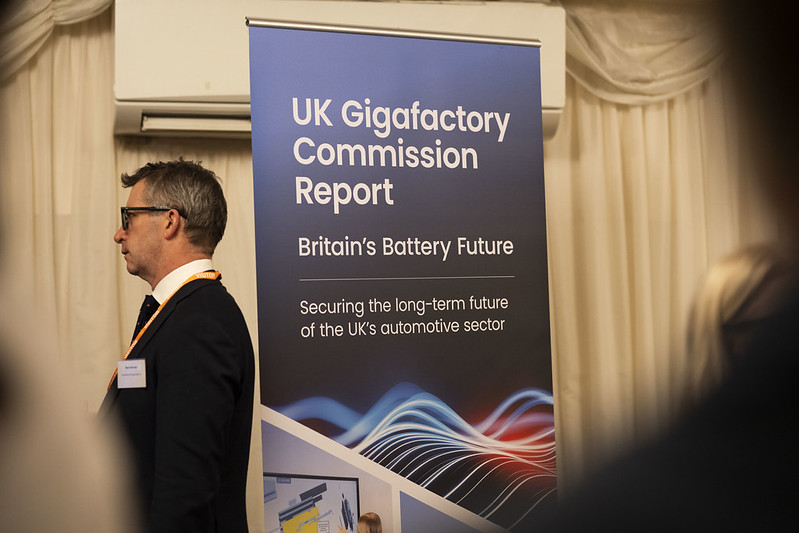
The UK Gigafactory Commission’s 2026 report, Britain’s Battery Future sets this challenge out clearly. Alongside new gigafactories, the UK must urgently develop precursor manufacturing, expand black mass (BM) production capacity, scale hydrometallurgical processing, and embed closed-loop lithium-ion battery recycling into the heart of the supply chain.
For Recyclus, this agenda is not theoretical. It defines the next phase of UK industrial competitiveness. Notably, Recyclus has been cited in the report as a lithium-ion battery recycler that is already delivering operational capacity in the UK, demonstrating that elements of this future system are being built today rather than remaining aspirational.
From Cells to Chemistry: Why Precursor Manufacturing Matters
The Commission identifies a critical vulnerability in the UK battery supply chain: a near-total reliance on imported cathode active materials (CAM), anode active materials (AAM), and their chemical precursors. From 2027 onwards, tighter UK–EU Rules of Origin (RoO) will require batteries to contain a higher share of originating material to qualify for tariff-free trade. Without domestic precursor production, UK-made batteries and vehicles face a structural cost disadvantage.
Precursor manufacturing — particularly for lithium, nickel, cobalt, and manganese compounds — is therefore not an optional add-on. It is a strategic enabler.
Establishing UK-based precursor capacity:
- Reduces exposure to geopolitically concentrated supply chains
- Supports compliance with RoO and future recycled-content rules
- Anchors higher-value manufacturing activity within the UK
- Creates the foundation for scalable CAM and AAM production
Crucially, the report highlights that recycling-led precursor supply can accelerate this transition, allowing recovered metals to flow directly back into UK battery production.
Scaling Black Mass Production: Turning Waste into Strategic Feedstock
As electric vehicle adoption grows, so too will volumes of end-of-life batteries and manufacturing scrap. The Commission is explicit: recycling will become a major source of critical minerals from the mid-2030s onwards, and capacity must be built now.
Black mass — the shredded, concentrated output of battery recycling — is the gateway material that enables this circular supply.
Expanding UK black mass production capacity delivers immediate and long-term benefits:
- Converts battery waste into a high-value secondary raw material
- Reduces reliance on imported mined concentrates
- Creates a domestic feedstock for hydrometallurgical refining
- Lowers lifecycle emissions compared with virgin extraction
The report stresses that without sufficient domestic black mass processing, the UK will struggle to meet future recycled-content requirements and may be forced to export waste while importing refined materials — an outcome that undermines both resilience and sustainability.
Hydrometallurgical Processing: The Engine of Value Recovery
Hydrometallurgy sits at the heart of modern battery recycling. Unlike traditional pyrometallurgical routes, hydrometallurgical processes enable high recovery rates for lithium, nickel, cobalt, and manganese while preserving material quality suitable for battery re-use.
The Commission identifies investment in hydrometallurgical recovery as strategically vital to:
- Produce battery-grade metal salts from recycled black mass
- Enable closed-loop recycling into UK CAM and precursor plants
- Support ESG traceability and compliance with UK/EU standards
- Strengthen alignment with the UK Critical Minerals Strategy
Developing this capability at scale positions the UK not only as a battery manufacturing location, but as a materials processing hub for Europe — capturing value that would otherwise sit offshore.
Closing the Loop: From Recycling to Re-Manufacture
The Commission’s vision is clear: recycling must not sit at the periphery of the battery industry. It must be fully integrated.
Closed-loop recycling — where recovered materials are fed directly back into UK battery production — delivers a triple dividend:
- Security: Reduced exposure to global raw material shocks
- Competitiveness: Lower long-term material costs and tariff resilience
- Sustainability: Lower carbon intensity and waste minimisation
By embedding recycling, precursor refining, and active material production alongside gigafactories, the UK can build a vertically integrated ecosystem that supports long-term growth rather than short-term capacity additions.
Recyclus’ Perspective: Building Industrial Resilience
The UK Gigafactory Commission makes one message unmistakably clear: battery manufacturing alone is not enough. Without precursor manufacturing, black mass processing, hydrometallurgical recovery, and closed-loop recycling, the UK risks building gigafactories on fragile foundations.
For Recyclus, this is precisely where opportunity lies. By scaling advanced recycling and materials recovery in the UK, we can help create a battery value chain that is competitive, compliant, and circular by design.
The race to electrification will be won not just by those who build cells, but by those who control the materials that go into them — and bring them back again.