
Europe Accelerates Critical Mineral Security. The UK Must Strengthen Its Own Domestic Capabilities.
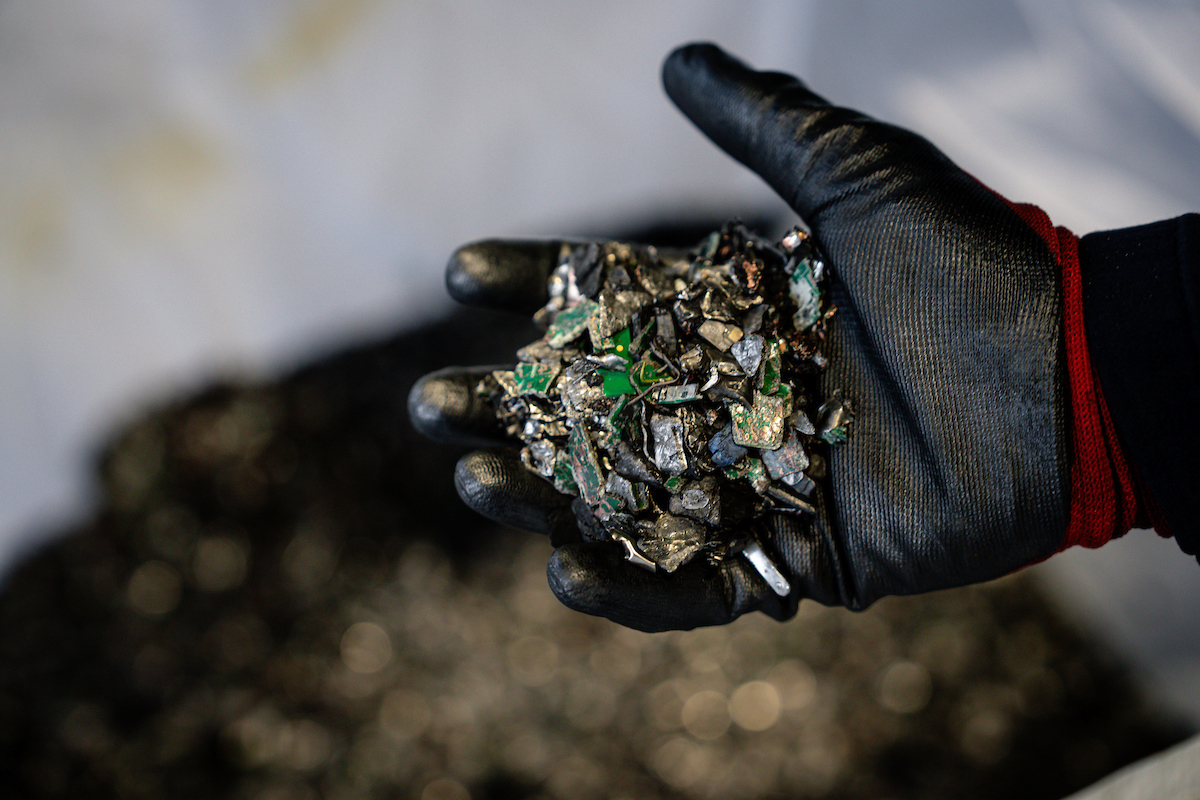
As the European Union announces 46 new strategic critical raw material projects, the importance of developing domestic battery recycling and material recovery infrastructure has never been clearer.
The race to secure critical minerals is gathering pace across Europe. In a significant announcement on 9 October 2026, the European Commission selected 46 new strategic raw material projects across 16 Member States, reinforcing its commitment to reducing reliance on overseas supply chains and strengthening Europe’s industrial resilience.
The projects, expected to require approximately €21.1 billion in investment, cover materials including lithium, nickel, cobalt, graphite and rare earth elements — resources essential to battery manufacturing, electrification, renewable energy technologies and defence applications.
For the UK, the announcement is a timely reminder that critical mineral security is no longer simply an environmental or economic consideration. It is increasingly a matter of industrial competitiveness, national resilience and strategic independence.
Critical Minerals: A Growing Strategic Priority
Global demand for critical minerals continues to grow as economies electrify transport, expand renewable energy infrastructure and invest in advanced manufacturing and defence technologies.
However, the supply chains supporting these industries remain highly concentrated geographically. While mineral resources may be extracted in several countries, much of the processing and refining capacity is controlled by a relatively small number of international suppliers.
This creates vulnerabilities for industries dependent on reliable access to essential materials.
The European Union is responding through its Critical Raw Materials Act, which establishes benchmarks for 2030, including meeting at least 10% of annual strategic raw material consumption through EU extraction capacity, 40% through EU processing capacity and 25% through EU recycling capacity.
The latest selection of strategic projects demonstrates that Europe is moving beyond policy ambition towards practical investment in the infrastructure required to strengthen its supply chains.
The UK must ensure that it is equally well positioned.
Battery Recycling Has a Critical Role to Play
While developing new mineral resources and diversifying international supply agreements remain important, recycling offers another opportunity to improve access to critical materials.
End-of-life lithium-ion batteries contain valuable materials that can potentially be recovered and returned to productive use.
Through specialist recycling processes, batteries can be safely dismantled or mechanically processed to produce materials including copper, aluminium and black mass — a concentrated mixture that, depending on battery chemistry, may contain lithium, nickel, cobalt, manganese and graphite.
These materials represent a potentially valuable secondary resource for UK industry, supporting applications ranging from battery manufacturing and energy storage to advanced technologies and strategically important industrial sectors.
However, producing black mass is only part of the solution.
To maximise the strategic and economic benefits of battery recycling, the UK must also develop the domestic capability to separate, refine and convert recovered materials into products suitable for reuse in manufacturing.
Without this downstream infrastructure, valuable materials recovered from UK batteries may still need to be exported for further processing, limiting the economic value retained domestically and maintaining dependence on international supply chains.
Developing a more complete domestic recycling ecosystem would help address this challenge, supporting greater supply chain resilience while creating opportunities for investment, innovation and skilled employment.
An Opportunity for UK Industry
The UK’s transition towards electrification, renewable energy and increasingly sophisticated technologies is creating growing demand for secure and sustainable supplies of critical materials.
This presents both a challenge and an opportunity.
Lithium-ion batteries are now integral to a wide range of applications, from electric vehicles and industrial equipment to grid-scale energy storage, portable electronics and defence technologies. As these batteries reach the end of their operational lives, the volume requiring safe and responsible treatment will increase.
Establishing the infrastructure to manage these batteries is essential. But the longer-term opportunity is to build a circular supply chain in which valuable materials are recovered, processed and ultimately returned to productive use.
Such an approach could reduce reliance on imported primary materials, retain more value within the UK economy and support the development of competitive domestic industries.
It could also strengthen resilience across strategically important sectors, including defence, aerospace, energy and advanced manufacturing, where reliable access to critical materials is increasingly important.
Achieving this will require more than recycling capacity alone. It will depend on coordinated investment in collection, logistics, processing, refining and materials development, supported by research, innovation and an appropriate regulatory framework.
Building on the Foundations Already in Place
At Recyclus Group, we recognise that developing resilient UK critical mineral supply chains requires both established industrial capability and continued technological innovation.
Through our industrial-scale lithium-ion battery recycling facility in Wolverhampton, we are already contributing to the UK’s domestic recycling infrastructure, safely processing end-of-life batteries and producing black mass containing valuable materials.
Alongside material recovery, safe battery handling and storage are equally important components of a resilient recycling infrastructure. Through our LiBox battery storage solution, Recyclus Group also supports the safe containment and management of lithium-ion batteries, helping to address the fire risks associated with damaged, defective and end-of-life batteries. This reinforces the importance of safety at every stage of the battery lifecycle, from storage and transportation through to recycling and material recovery.
Alongside these operations, we are actively participating in collaborative research and development programmes designed to take UK battery recycling further.
Through consortium initiatives including Project COMET and Project ReCAM, we are working with partners across industry, academia and the wider battery value chain to develop technologies that could enable valuable materials to be recovered from end-of-life batteries and returned to the domestic supply chain.
These programmes are important steps towards establishing the downstream processing and material recovery capabilities needed to support a genuinely circular UK battery economy.
There is more work to do. However, the foundations are already in place. The next stages of development will require continued investment, innovation and, critically, collaboration across the wider industrial ecosystem — from battery manufacturers and recyclers to technology developers, researchers, end users and policymakers.
Europe is demonstrating the strategic importance of securing critical mineral supply chains. For the UK, the opportunity is to build on its existing capabilities and work collectively towards a more resilient, competitive and circular economy that supports the nation’s long-term industrial and strategic needs.