
As Battery Energy Storage Accelerates, Recycling Must Keep Pace
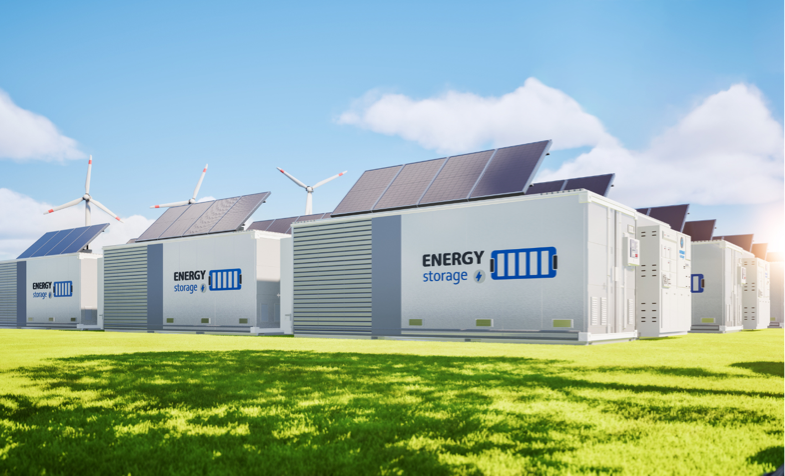
The global energy transition is entering a new phase.
For years, lithium-ion battery growth has been driven primarily by electric vehicles. However, recent announcements from battery manufacturers suggest that energy storage systems are rapidly becoming one of the most important growth sectors in the battery industry.
Earlier this month, CATL, the world’s largest battery manufacturer, announced that it expects energy storage to account for half of its global sales by 2030, compared with approximately 25% today. Just five years ago, energy storage represented only 2% of the company’s battery business. The shift reflects the increasing role of Battery Energy Storage Systems (BESS) in supporting renewable energy generation, enhancing grid resilience and enabling the wider electrification of energy networks.
As more wind and solar projects come online, energy storage is becoming essential infrastructure. Batteries help balance intermittent renewable generation, support grid stability and provide critical flexibility to electricity networks. Industry forecasts suggest that battery deployments across Europe and globally will continue to accelerate throughout the remainder of this decade.
The message is clear: BESS is no longer a niche technology. It is becoming a cornerstone of the modern energy system.
The Challenge Beyond Deployment
While the growth of BESS is a positive development for the energy transition, it also raises an important question:
What happens to these batteries when they reach the end of their operational life?
Every gigawatt-hour of new storage capacity installed today represents a future stream of lithium-ion batteries that will eventually require safe, compliant and sustainable treatment.
Historically, much of the conversation around battery recycling has focused on electric vehicles. However, utility-scale energy storage systems are now becoming a significant source of future battery waste. As deployment volumes increase, so too will the need for dedicated recycling infrastructure capable of handling large-format lithium-ion batteries safely and efficiently.
This is not simply a waste management issue. End-of-life batteries contain valuable materials including lithium, nickel, cobalt, copper and graphite. Recovering these materials helps reduce dependence on primary extraction, supports supply chain security and contributes to the development of a circular battery economy.
As governments and industries seek to secure supplies of critical minerals, battery recycling is increasingly being recognised as a strategic component of the energy transition. The batteries being deployed today will become tomorrow’s source of valuable raw materials.
Recycling Infrastructure Cannot Be an Afterthought
The battery industry has become increasingly aware that recycling capacity must grow alongside battery production.
Major manufacturers are already investing heavily in recycling capabilities, recognising that end-of-life battery management is becoming an integral part of the battery value chain rather than a standalone waste activity.
For BESS owners, developers and operators, end-of-life planning is becoming an increasingly important consideration during project development. Regulatory requirements are evolving, stakeholder expectations are rising, and investors are paying greater attention to circular economy principles and environmental performance.
Battery recycling should therefore be considered from the outset of a project’s lifecycle rather than at the point of decommissioning.
The most successful energy storage projects of the future will not only deliver operational performance but will also demonstrate a clear and responsible pathway for end-of-life management.
Recyclus Has Already Demonstrated the Solution
At Recyclus, we recognised early that the growth of lithium-ion batteries would eventually require dedicated domestic recycling infrastructure.
Today, we have proven capability in the safe processing and recycling of large-format lithium-ion batteries, including Battery Energy Storage System (BESS) modules and bulk smart-meter batteries. Through our low-carbon mechanical recycling process, we have demonstrated that complex battery waste streams can be managed safely, compliantly and sustainably while recovering valuable materials for reuse within the supply chain.
Our experience extends beyond pilot projects and laboratory trials. Since commencing commercial lithium-ion battery recycling operations in July 2023, Recyclus has built a track record of supporting organisations across the energy sector with practical end-of-life battery solutions. We are trusted by energy retailers, Distribution Network Operators (DNOs), BESS developers and utility contractors who require reliable, compliant and scalable battery recycling services.
As the BESS market expands, the need for proven recycling infrastructure will only increase. Every battery installed today will eventually require responsible treatment, creating both a challenge and an opportunity for the industry. By planning for end-of-life management from the outset, asset owners can reduce environmental impact, support circular economy objectives and ensure compliance with evolving regulations.
Building a Truly Circular Battery Economy
The growth of battery energy storage is one of the defining energy stories of the decade. As deployment accelerates, the industry must ensure that recycling capacity keeps pace.
The future of energy storage is not just about manufacturing and deployment. It is about creating a complete lifecycle solution that maximises resource efficiency, reduces waste and supports long-term sustainability.
At Recyclus, we are helping to ensure that the batteries powering the energy transition today do not become the waste challenge of tomorrow.
Because a successful energy transition depends not only on how we use batteries, but also on how responsibly we manage them when their job is done.