
Lithium-Ion Battery Fires: Why Every Business Needs to Put Safety First
Lithium-ion batteries power modern business. From laptops, power tools and e-bikes to warehouse equipment, energy storage systems and electric vehicles, they have become essential across almost every industry.
But alongside this rapid adoption comes a growing safety challenge that businesses can no longer afford to overlook: lithium-ion battery fires.
Recent reports continue to highlight the increasing number of fires linked to damaged, incorrectly stored or improperly disposed lithium-ion batteries. The risks are no longer limited to EV workshops or specialist recycling facilities — they now affect offices, warehouses, logistics hubs, retail environments, manufacturing sites and public spaces alike.
Understanding the Risk
Lithium-ion batteries are highly efficient because they store large amounts of energy in compact spaces. However, when damaged, overheated, overcharged or improperly handled, they can enter a dangerous process known as thermal runaway.
Thermal runaway causes rapid overheating that can lead to fire, explosion and the release of toxic gases. Unlike conventional fires, lithium-ion battery fires can spread quickly, burn at extreme temperatures and even reignite hours or days later.
As battery usage grows across industries, businesses are increasingly facing challenges around:
- Safe storage of damaged or end-of-life batteries
- Transportation of lithium-ion batteries
- Workplace charging practices
- Waste management and recycling
- Fire prevention and emergency planning
Importantly, many businesses may already have hidden battery risks onsite without fully recognising them. Old laptops in storage cupboards, damaged power tool batteries, returned e-bike batteries, or defective battery packs waiting for collection can all present serious hazards if not managed correctly.
Safety Can’t Be an Afterthought
For businesses committed to protecting their people, premises and operations, battery safety must become part of everyday risk management.
That means taking proactive steps such as:
- Training staff to identify damaged or unstable batteries
- Separating defective batteries from general waste
- Implementing safe charging procedures
- Reviewing fire risk assessments
- Using certified containment and transport solutions
The reality is simple: prevention is always safer — and far less costly — than responding to a major battery fire incident.
Introducing the New ‘LiBox 20 Hinge’
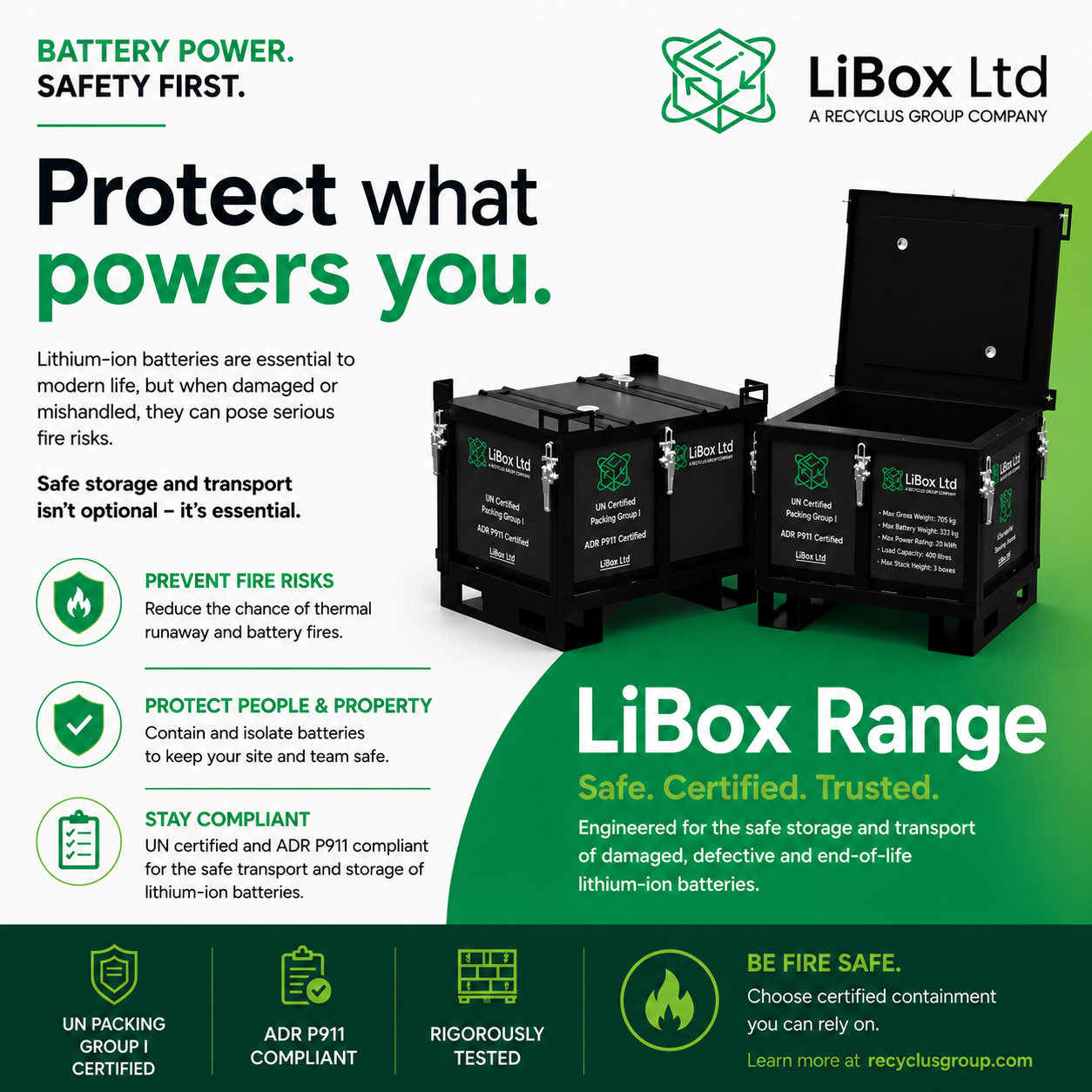
To help businesses manage these risks more effectively, Recyclus Group has expanded its LiBox range with the introduction of the new hinged LiBox solution.
Designed for safer handling, storage and transportation of lithium-ion batteries, the LiBox 20 Hinge offers businesses a practical and compliant way to reduce fire risks associated with damaged, defective or end-of-life batteries.
Built to industry-leading safety standards, the LiBox range is UN-certified and ADR-compliant, engineered specifically for the safe containment of lithium-ion batteries. The system is designed to help control thermal events and minimise the risk of fire spread, protecting people, property and the environment.
The new hinged design also improves accessibility and operational usability, making it easier for businesses to safely load and manage batteries while maintaining robust containment performance.
As organisations across multiple sectors continue to adopt battery-powered technologies, solutions like the LiBox 20 Hinge are becoming an increasingly important part of responsible business operations.
A Growing Responsibility for Every Industry
Lithium-ion batteries are here to stay — and their role in modern business will only continue to grow.
But with that growth comes a shared responsibility to ensure batteries are stored, transported and recycled safely.
Whether you operate a warehouse, manage facilities, run a retail operation, oversee logistics, support renewable energy systems or work with battery-powered equipment every day, putting safety first is essential.
By combining awareness, training and the right containment solutions, businesses can significantly reduce risk while supporting a safer and more sustainable future.
To learn more about the LiBox 20 Hinge and safe lithium-ion battery management solutions, visit our Storage and Transport page.